

62
Before getting carried away, there are two questions I would ask:
The brochure looks impressive. The uniform looks smart. The flight academy offers CPL training, with a Diploma in Aviation added to the package.
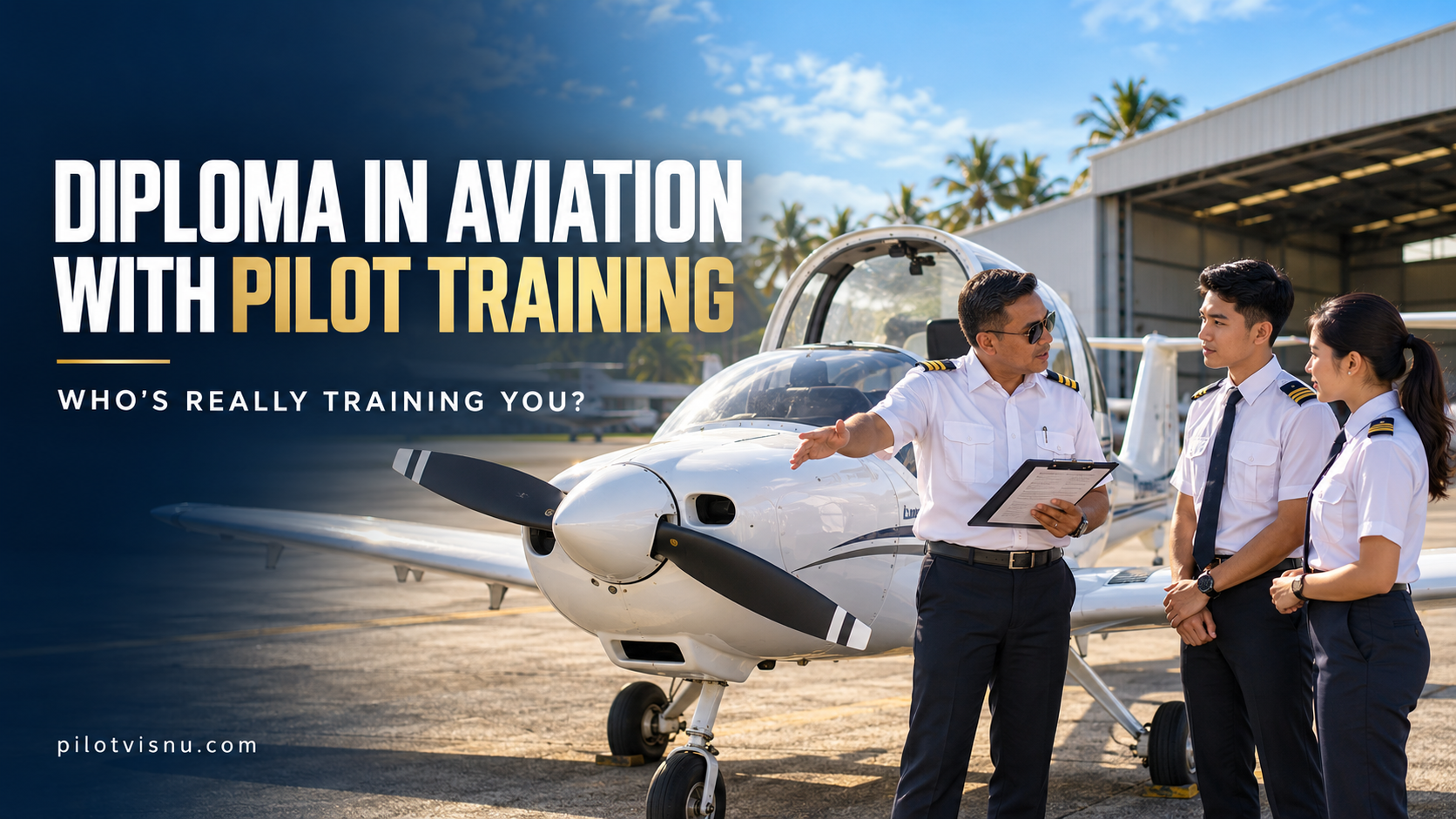
Who is actually going to train me to fly, and who is actually awarding my diploma?In most Diploma in Aviation (DIA) programmes with pilot training, these are two different organisations. The flight academy delivers ground school and flying towards the pilot licence. The diploma is awarded by a separate academic institution that partners with the academy. I think students and parents should understand both sides of that arrangement before committing.
How These Programmes Are Usually Structured
The core of the programme is the pilot training: ground school, CAAM examinations and flying towards a Commercial Pilot Licence (CPL) with Instrument Rating and Frozen ATPL. That part is delivered by the flight academy. The diploma is an academic qualification that is added to the package. The flight academy does not award it on its own. A partner college or university awards it, and that institution is responsible for its accreditation. In other words, you are not choosing a college that happens to offer flying. You are choosing a flight academy that offers a diploma through a third party.Why I Think a DIA Alongside Pilot Training Makes Sense
A properly structured DIA can give students an academic qualification alongside their professional flying qualifications. I like that combination because it brings formal academic study into the pilot-training journey. Depending on the diploma’s recognition and the requirements of other institutions, it may also support further studies. The important point is that the diploma and pilot licence have separate requirements. I would want the academic programme to fit sensibly around ground school, examinations and flying, with a clear plan for completing both.Why I Would Choose the Flight Academy First
Because the licence is the main goal, I would choose the flight academy first and treat the diploma as a secondary consideration. My personal preference is for an academy that directly manages its flying operation: the instructors, training aircraft, scheduling and oversight of student progress. What appeals to me about this is accountability. If a student has a concern about flying progress, instructor availability or scheduling, there should be an identifiable team responsible for handling it. I would want the people explaining the programme to understand how the flying operation actually works and to give realistic answers about training capacity and progression.What I Would Want to Know About the Diploma Partner
An academic partnership can be useful when everyone’s responsibilities are clearly documented. My concern would be a student signing up for a combined package without knowing which institution awards the diploma, whether it is properly accredited, or what happens to the diploma if flying is delayed or stopped. Because two organisations are involved, I would want these points explained in writing before paying:- Which institution awards the diploma, and is it accredited?
- Who teaches and assesses the academic modules?
- How are the fees split between the academy and the college?
- Who handles refunds or extra charges on each side?
- Can the diploma still be completed if the flying phase is delayed?
AATA and HM Aerospace: Two Academies I Would Look Into
HM Aerospace (HMA) publishes a Diploma in Aviation alongside CPL/IR with Frozen ATPL. Its course structure describes flight training on HMA’s DA40 and DA42 aircraft in Langkawi, while Meritus College publishes the academic side of the combined pathway. [2] [3] In that arrangement, I would look closely at both parts: HMA as the flying operation, and the academic partner’s role and terms in the offer documents. Asia Aeronautical Training Academy (AATA) publishes details of its own flight training centre, aircraft and instructors, alongside academic pathways. If you are considering AATA for a DIA route, request the current programme details, the awarding institution and the accreditation reference for your intended intake. [4] [5] Both academies are worth examining because they directly operate their own flight training. The next step is to understand which academic partner is attached to the programme being offered to you.What I Would Check Before Paying a Deposit
These would be my first questions:- Is the flight academy CAAM-approved, and is my training place confirmed for this intake?
- Which institution awards the diploma, and what is its current accreditation status?
- Who coordinates my academic studies with my flying progress?
- Am I signing with the academy, the college, or both?
- What is included in the fees, and who handles delays, extra charges or refunds?
